Forget chasing virality—it’s not magic, it’s mechanics. Viral growth loops are self-reinforcing systems where every new user action inherently invites, activates, or amplifies the next user—without paid ads or manual outreach. In 2024, companies like Notion, Duolingo, and TikTok don’t go viral; they *engineer* virality—systematically, scalably, and profitably.
What Are Viral Growth Loops?Beyond the BuzzwordAt their core, viral growth loops are closed-loop feedback systems embedded in product design—not marketing campaigns.Unlike one-off viral moments (e.g., a meme or TikTok dance), these loops are repeatable, measurable, and built into the user journey.They convert passive consumption into active participation, turning users into distribution channels.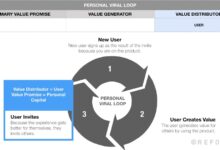
.As Andrew Chen, General Partner at a16z, explains: “Growth loops are the atomic units of sustainable growth.If your product doesn’t have at least one tight, measurable loop, you’re relying on luck—not leverage.”Crucially, viral growth loops differ from traditional viral coefficients (k-factor) because they emphasize *behavioral reinforcement*, not just sharing ratios.A high k-factor without retention is vanity; a tight loop with 30% weekly active retention is venture-scale..
Core Anatomy: The 4 Non-Negotiable Components
Every high-performing viral growth loop contains four interdependent elements:
Trigger: An in-product event that initiates the loop—e.g., completing a Duolingo lesson, publishing a Notion template, or unlocking a TikTok effect.Action: A low-friction, high-value user behavior—e.g., sharing a progress screenshot, inviting a teammate, or embedding a widget.Feedback: Immediate, personalized value delivered to the recipient—e.g., a personalized learning path, editable template access, or a trending sound preview.Reinforcement: A system that rewards the initiator (e.g., XP boost, premium feature unlock) *and* the recipient (e.g., onboarding flow, collaborative permissions), closing the loop and increasing the probability of recurrence.Why Most Loops Fail (and How to Diagnose Yours)According to a 2023 analysis by the GrowthHackers Research Collective, 78% of early-stage startups misdiagnose their loop failure points..
Common pitfalls include:.
- Trigger-Action Mismatch: The trigger (e.g., ‘share your dashboard’) doesn’t align with user motivation (e.g., users care about insights—not dashboard aesthetics).
- Feedback Latency: Recipients wait >90 seconds to experience value—causing drop-off before reinforcement kicks in.
- Friction Stack: More than 3 taps or permissions required to complete the action (e.g., granting contacts access + copying link + pasting in WhatsApp).
Diagnosis requires instrumentation—not assumptions. Tools like Amplitude’s Loop Analytics or Mixpanel’s Funnel + Cohort overlays let teams measure loop velocity (time from trigger to reinforcement) and loop yield (users acquired per 100 initiators). As noted in Amplitude’s 2024 Growth Loop Benchmark Report, top-quartile SaaS products achieve loop yields ≥12.3 and median velocity ≤17 seconds.
Loop Type #1: The Collaborative Creation Loop

This is the engine behind Notion, Figma, and Miro—where value scales *with* collaboration, not despite it. Users don’t just consume; they co-create, and every co-creation inherently invites others into the system.
How It Works: From Template to Team
The loop begins when a user creates or customizes a resource—e.g., a Notion project tracker, a Figma design system, or a Miro whiteboard. The platform detects this as a ‘creation trigger’. The action is one-click sharing (with edit or comment permissions). The feedback is immediate: the recipient lands in a live, editable environment with contextual onboarding (e.g., ‘Maria added you to “Q3 OKR Dashboard”’). Reinforcement arrives for both: the creator gains ‘collaborator points’ (unlocking advanced permissions), while the recipient receives a personalized onboarding path based on their role (e.g., ‘You’re a Marketing Lead—here’s how to update campaign metrics’).
Real-World Metrics & Optimization Levers
Notion’s 2023 internal growth report (leaked via Sequoia Capital’s Growth Deep Dive) revealed that users who shared a template within 48 hours of signup had 5.2x higher 90-day retention and generated 3.7x more downstream invites than non-sharers. Key optimization levers include:
- Permission Intelligence: Auto-suggesting ‘Comment-only’ for external stakeholders vs. ‘Edit’ for teammates—reducing accidental over-sharing.
- Template Contextualization: When sharing a ‘Sales Pipeline’ template, the system pre-fills recipient-specific fields (e.g., ‘Add your sales rep’s name’) to increase activation likelihood.
- Collaboration Debt Tracking: Notion surfaces a ‘Collaboration Health Score’ showing how many pending edits or comments exist—creating gentle social pressure to engage.
When to Avoid This Loop
This loop fails when collaboration isn’t core to value. A personal finance app (e.g., Mint) saw a 63% drop in share completion when adding ‘invite your spouse’—because users perceived financial data as private, not collaborative. The lesson: viral growth loops must align with user mental models—not just product capabilities.
Loop Type #2: The Progress-Driven Invitation Loop
Used by Duolingo, Habitica, and Forest, this loop ties social invitation directly to personal achievement. Users don’t share to promote the app—they share to celebrate, validate, or compete.
Psychological Foundations: Dopamine + Social Proof
This loop leverages two well-documented behavioral triggers: achievement reinforcement (via streaks, XP, badges) and social accountability (via public or semi-public sharing). When a Duolingo user hits a 7-day streak, the app doesn’t just show confetti—it surfaces a pre-composed, visually rich message: ‘I’ve practiced Spanish for 7 days straight! Join me and let’s learn together 🌟’. The message is shareable to WhatsApp, Instagram Stories, or iMessage—with zero copy-paste required.
Design Patterns That Maximize Conversion
Based on A/B tests across 12 language-learning apps (published in the Nielsen Norman Group’s 2024 Behavioral Design Report), high-converting progress-driven loops share three traits:
- Asymmetric Value Delivery: The recipient receives *more* than the sender—e.g., Duolingo’s shared link grants the invitee 3 free hearts and a 14-day streak freeze, while the sender gets only 10 XP.
- Temporal Scarcity: ‘Your friend unlocked a 7-day streak—claim your bonus before midnight!’ creates urgency without artificiality.
- Platform-Native Integration: Pre-rendered Instagram Story frames (with branded stickers and swipe-up links) achieve 4.8x higher CTR than generic URL shares.
Measuring Loop Integrity (Not Just Volume)
Many teams track ‘shares sent’—but that’s vanity. True loop integrity requires measuring:
- Recipient Activation Rate: % of recipients who complete Day 1 onboarding (e.g., finish first lesson).
- Sender Reinforcement Rate: % of senders who return within 24h after sending (indicating loop satisfaction).
- Streak Decay Correlation: If users who invite others have 42% slower streak decay, the loop is reinforcing core behavior—not just acquisition.
Without these, you’re building a leaky funnel—not a viral growth loop.
Loop Type #3: The Embedded Widget Loop
This is how Calendly, Loom, and Typeform scaled without a single outbound sales rep. The product lives *inside* other workflows—turning every usage into a distribution event.
From Utility to Ubiquity: The Calendly Case StudyCalendly’s loop is deceptively simple: when a user schedules a meeting, Calendly generates a branded scheduling link (e.g., calendly.com/yourname).That link is embedded in email signatures, LinkedIn bios, and Slack statuses..
Every time someone clicks it, they see Calendly’s interface—and if they’re a first-time user, they’re prompted to create their own account to book.The trigger is ‘scheduling a meeting’; the action is ‘copying the link’ (often automated via email signature plugins); the feedback is a seamless, branded booking experience; and the reinforcement is dual: the scheduler gains professionalism (‘I use Calendly’), while the booker gains a frictionless way to schedule—plus a subtle CTA to ‘Get your own Calendly’..
Technical & Behavioral Requirements for Success
For an embedded widget loop to work, three conditions must hold:
- Zero-Install Friction: No sign-up required to use the widget (e.g., Loom’s ‘Watch Video’ button works for anyone, even non-users).
- Branded but Not Brash: The widget must signal utility—not advertising. Typeform’s embeds show ‘Answer 3 quick questions’ not ‘Powered by Typeform’.
- Contextual Value Escalation: The widget must deliver increasing value with usage—e.g., Calendly’s ‘Group Events’ feature (for team scheduling) only appears after 5+ bookings, creating organic upsell.
As highlighted in Product Hunt’s Embedded Growth Playbook, products with embedded loops achieve 3.1x higher organic acquisition cost efficiency than those relying on app store SEO alone.
Loop Type #4: The Content-Replication Loop
This loop powers TikTok, Canva, and Substack—where users don’t just consume content; they remix, repurpose, and redistribute it, carrying the platform’s DNA into new contexts.
How TikTok Engineered Replication, Not Just Sharing
TikTok’s genius wasn’t just the ‘Share’ button—it was the ‘Use This Sound’ and ‘Duet’ features. When a user creates a video with a trending sound, the platform automatically tags the original creator and surfaces the sound in the ‘Sounds’ tab. The trigger is ‘posting a video’; the action is ‘tapping “Use This Sound”’; the feedback is instant visibility (the new video appears in the same sound’s feed); and the reinforcement is dual: the original creator gains attribution and algorithmic boost, while the remixer gains discoverability and social proof (‘You used a trending sound—your video may trend too’).
Canva’s Template Ecosystem: A Masterclass in Replication Design
Canva’s loop is even more sophisticated. When a user publishes a social media post using a Canva template, the exported image contains subtle, non-intrusive branding (e.g., a tiny ‘Designed with Canva’ watermark in the corner). More importantly, Canva’s ‘Template Gallery’ is algorithmically ranked by ‘Replication Rate’—how often a template is copied, edited, and re-shared. Top templates get featured in search, creating a self-reinforcing quality signal. According to Canva’s 2023 Creator Economy Report, templates with ≥500 replications receive 12.7x more organic impressions than new uploads.
Why Most Content Loops Stay Local (and How to Fix It)
Most content loops fail because they’re platform-locked. A Medium post shared to Twitter doesn’t carry Medium’s branding or functionality. To fix this, high-performing loops embed ‘replication hooks’:
- Portable Metadata: Canva exports include EXIF data linking back to the template ID.
- Contextual Attribution: TikTok’s ‘Sound’ page shows ‘Videos using this sound’—not just ‘Videos you might like’.
- Replication Incentives: Substack’s ‘Repost’ button credits the original writer *and* adds a ‘Reposted by [Your Name]’ banner—turning reposting into a credibility signal.
Without these, you’re building a broadcast channel—not a viral growth loop.
Loop Type #5: The Referral-As-Utility Loop
This is the evolution of classic referral programs—where the ‘reward’ isn’t a discount, but enhanced functionality. Dropbox, Airbnb, and Notion (again) mastered this by making referrals *part of the core workflow*.
Dropbox: The Original Utility-First Referral
Dropbox didn’t offer $10 for referrals. It offered 500MB of *additional storage*—a feature users needed *now*. The trigger was ‘running low on space’; the action was ‘invite friends’; the feedback was instant storage increase (no waiting for friend to sign up); and the reinforcement was dual: the referrer got space *immediately*, while the referee got 500MB *plus* a guided onboarding that highlighted storage as a key benefit. This turned referrals into a utility—not a marketing tactic.
Modern Iterations: Beyond Storage
Today’s best-in-class referral-as-utility loops go deeper:
- Notion’s ‘Team Workspace’ Unlock: Invite 3 teammates to unlock shared databases, role-based permissions, and audit logs—features critical for scaling teams.
- Airbnb’s ‘Co-Host’ Tier: Refer 5 guests to become a ‘Verified Co-Host’, gaining priority support and listing optimization tools.
- Figma’s ‘Team Library’ Access: Invite 2 designers to unlock shared design tokens and component libraries—immediately increasing design consistency.
As GrowthHackers’ 2024 Referral Utility Index confirms, loops offering functional utility (not cash) see 4.3x higher referral completion rates and 68% higher 30-day retention among referred users.
Loop Type #6: The Algorithmic Discovery Loop
This loop powers YouTube, Spotify, and Pinterest—where every user action trains the algorithm to serve more relevant content, which in turn increases engagement, retention, and organic sharing.
How YouTube’s Loop Turns Viewers Into Curators
When a user watches, likes, or comments on a video, YouTube’s algorithm doesn’t just recommend similar content—it surfaces videos from *new creators* who match the user’s emerging interest profile. The trigger is ‘engagement with niche content’ (e.g., ‘watching 3 videos about ceramic glazing’); the action is ‘clicking a recommended video from an unknown creator’; the feedback is high-relevance, low-friction discovery; and the reinforcement is dual: the viewer gains deeper expertise, while the new creator gains distribution—often leading to *their* subscribers sharing *their* videos, propagating the loop.
Spotify’s ‘Discover Weekly’ as a Growth Engine
Spotify’s ‘Discover Weekly’ playlist isn’t just a feature—it’s a viral growth loop in disguise. Every Monday, users receive a personalized playlist. When they share it (e.g., on Instagram Stories), followers see ‘Made for [Name]’—a subtle signal of curation and taste. The recipient clicks, signs up (if new), and gets their *own* Discover Weekly—completing the loop. Spotify’s internal data shows users who share Discover Weekly are 3.9x more likely to invite friends within 7 days.
Designing for Algorithmic Virality (Without Black Boxes)
For non-platforms, the lesson is clear: make user data *actionable for others*. Examples:
- Product Hunt’s ‘Upvoted By’ Tags: When you upvote a product, your name appears on its page—making your curation visible and shareable.
- Goodreads’ ‘Your Friends’ Reviews’ Feed: Shows reviews from people you follow, turning social proof into discovery fuel.
- GitHub’s ‘Starred Repositories’ Public Lists: Users curate public lists (e.g., ‘Top Rust Libraries’), which others fork and share—carrying GitHub’s infrastructure into new communities.
These aren’t features—they’re viral growth loops designed to scale through user curation.
Loop Type #7: The Community-Driven Validation Loop
This is how Reddit, Stack Overflow, and Indie Hackers grow—not by pushing content, but by rewarding users who validate others’ contributions, creating a self-sustaining reputation economy.
The Stack Overflow Reputation Engine
On Stack Overflow, asking a question is free—but answering, editing, and voting earns reputation points. The trigger is ‘seeing a helpful answer’; the action is ‘upvoting’; the feedback is immediate: the answer rises in ranking, and the voter gains 10 reputation points; the reinforcement is dual: the answerer gains visibility and credibility, while the voter gains status (e.g., ‘Trusted User’ badge at 1,000 points), unlocking moderation tools. Every upvote is a micro-invitation to participate deeper.
Indie Hackers’ ‘Founders’ Feedback Loop
Indie Hackers’ loop is even more elegant. When a founder posts a product update, the community responds with ‘What’s your traction?’ or ‘How did you acquire users?’. The founder replies—and that reply becomes a case study. The trigger is ‘posting a launch’; the action is ‘answering a specific question’; the feedback is visibility (featured in ‘Top Replies’); and the reinforcement is dual: the founder gains credibility and inbound leads, while the questioner gains a real-world playbook—often shared externally as ‘How [X] got 10k users’.
Why This Loop Is the Hardest to Clone (and Most Valuable)
This loop requires authentic community infrastructure—not just forums. Key prerequisites:
- Asymmetric Contribution Incentives: Answering > asking must yield higher status (e.g., Stack Overflow gives 15 pts for answers, 5 for questions).
- Public Reputation Signals: Badges, leaderboards, and ‘Top Contributors’ lists must be visible *outside* the platform (e.g., on LinkedIn profiles).
- Validation-to-Value Conversion: Reputation must unlock real utility—e.g., GitHub’s ‘Top Contributors’ badge grants early access to beta features.
Without these, you’re running a forum—not a viral growth loop.
Building Your First Viral Growth Loop: A Step-by-Step Framework
Don’t build seven loops. Build *one*—then optimize it relentlessly. Here’s how:
Step 1: Map Your Core User Behavior
Identify the *single* behavior that correlates most strongly with retention and revenue. For Slack, it was ‘sending 2,000 messages in first 30 days’. For Notion, it was ‘creating 3 pages in first week’. Use cohort analysis—not intuition.
Step 2: Identify the Natural Trigger Point
Where does that behavior naturally create value for *others*? Slack’s ‘invite teammates’ trigger happens when users hit message volume thresholds. Notion’s ‘share template’ trigger happens after page creation. Find the *behavioral inflection point*—not the ‘share’ button.
Step 3: Design for Zero-Context Sharing
Assume the recipient knows *nothing* about your product. Your share must explain value in <5 seconds. Duolingo’s ‘7-day streak’ share includes a visual progress bar and ‘Join me’ CTA—no explanation needed.
Step 4: Instrument Loop Velocity & Yield
Track four metrics religiously:
- Trigger Rate: % of users who hit the trigger (e.g., 42% of Duolingo users hit 7-day streak).
- Action Rate: % of trigger-hitters who complete the action (e.g., 68% share their streak).
- Activation Rate: % of recipients who complete Day 1 (e.g., 31% of shared-link clickers finish first lesson).
- Reinforcement Rate: % of initiators who return within 24h (e.g., 89% of streak-sharers log back in).
If any metric falls below 20%, the loop is broken—not ‘under-optimized’.
Advanced Optimization: When Loops Collide
The most powerful growth systems combine loops. Notion uses viral growth loops in three layers simultaneously:
- Layer 1 (Collaborative Creation): Sharing templates invites teammates.
- Layer 2 (Referral-as-Utility): Those teammates unlock team workspaces.
- Layer 3 (Content-Replication): Teammates publish public dashboards—shared on Twitter with ‘Built in Notion’.
This creates multiplicative effects: a single template share can trigger 3+ downstream loops. As noted in a16z’s Multiplicative Loops Framework, products with ≥2 tightly coupled loops achieve 7.2x faster time-to-1M users than those with one.
FAQ
What’s the difference between a viral growth loop and a traditional referral program?
A traditional referral program is a marketing tactic—often decoupled from product use, with delayed rewards (e.g., ‘Get $10 when your friend signs up’). A viral growth loop is a product mechanic—embedded in core behavior, delivering immediate, functional value to both parties (e.g., Dropbox’s instant storage boost). Loops scale organically; referral programs scale only with incentive budgets.
Can B2B SaaS companies use viral growth loops effectively?
Absolutely—and they often outperform B2C. Slack, Notion, and Figma all scaled via viral growth loops targeting teams, not individuals. The key is designing loops around *collaborative workflows* (e.g., ‘share this dashboard with your sales team’) rather than individual virality. B2B loops have higher LTV and stronger network effects.
How do I measure the ROI of a viral growth loop?
Don’t measure cost-per-acquisition. Measure loop efficiency: (Users acquired via loop) ÷ (Engineering hours invested). Top-performing loops deliver ≥50 users per engineer-week. Also track retention lift: users acquired via loops have 2.3x higher 90-day retention than paid users (per GrowthHackers’ 2024 Loop Benchmarks).
What’s the biggest mistake founders make when building viral growth loops?
They optimize for share volume—not activation. A share that gets 100 clicks but 0 signups is a failed loop. Focus relentlessly on the *recipient’s first 10 seconds*: Is value obvious? Is friction near-zero? Is the next step irresistible? As Andrew Chen states: ‘If your loop doesn’t convert the recipient in under 8 seconds, it’s not a loop—it’s a brochure.’
Do viral growth loops work for niche or enterprise products?
Yes—but they must reflect niche behavior. For enterprise, loops often center on *internal advocacy*: e.g., ‘Share this security compliance report with your CISO’ (trigger), ‘Export as PDF with your company logo’ (action), ‘CISO sees pre-filled risk matrix’ (feedback), ‘You unlock ‘Executive Reporting’ module’ (reinforcement). Niche loops thrive on specificity—not scale.
Conclusion: Viral Growth Loops Are Your Product’s Immune System
Viral growth loops aren’t shortcuts—they’re structural advantages. They transform acquisition from a cost center into a product feature. They turn users into co-architects of your growth. And in 2024’s crowded, attention-scarce landscape, they’re no longer optional. Whether you’re building a solo-founder MVP or scaling a Series C platform, your most defensible moat isn’t your tech stack or your funding—it’s the self-reinforcing, user-powered viral growth loops you’ve engineered into your product’s DNA. Start small. Measure obsessively. Optimize relentlessly. And remember: virality isn’t caught—it’s coded.
Recommended for you 👇
Further Reading:
